Informatics Support
For comprehensive guidance on our services, workflows, and research support services, visit our Informatics Wiki
Requesting Clinical Data for Research
Before embarking on your research project, you should be aware of the spectrum of data sources available to study teams at VCU.
Sources vary with respect to:
- The regulatory overhead involved
- Self-Service or additional support needed
- Time to delivery
- Scale of data available
Research questions should be formulated in a way that can be answered by:
- A data source that aligns with your team’s budget
- Timeline
- Time to delivery
- Technical skill
I'm Doing
Reviewing patient records to design a research study, or to determine feasibility is considered “preparatory to research” under the Privacy Rule. To access protected health information (PHI), the use or disclosure must be solely to prepare a research protocol or for similar purposes preparatory for research. The following options are available for study feasibility or preparatory for research.
TriNetX
- Self-Service
- Data available on over 1 million VCU health patients, or over 150 million global patients
- Data is de-identified, significantly reducing time for regulatory approval
- Statistical analyses can be done within TriNetX, eliminating the need to download complex data files
- Online and VCU training available
The following options are available for research comparing patient groups or populations with intent to publish the results and or use in a grant submission
TriNetX
- Minimal support needed for data to be downloaded
- Data available on over 1 million VCU Health patients, or over 150 million global patients
- Data is de-identified, significantly reducing time for regulatory approval
- Statistical analyses can be done within TriNetX, eliminating the need to download complex data files
- Online and VCU training available
Cosmos
- Self-Service
- Data available from Epic users nationally
- Data is de-identified, similar to TriNetX
Honest Broker
- Additional time, resources, and compliance efforts associated with use
- Requires IRB approval
- Identified data requires secure data storage (Horizon system)
VCU Health Enterprise Analytics provides data for evaluating current systems of patient care for improving the quality or efficiency of that care
Learn about the difference between Research vs. QI
Request data and reports from VCU Health Enterprise Analytics here – Requires VCU Health Login
Contact VCU Health Enterprise Analytics at decision.support@mcvh-vcu.edu
Conducting Research Using De-identified Data
To comply with the HIPAA Minimum Necessary Data rule, researchers are required to use de-identified or Limited datasets when possible. De-identified and Limited data sources (i.e. TriNetX, Cosmos, APCD) allow study teams to access a huge amount of information with minimal regulatory overhead and risk to patients.
The following analyses can be performed in TriNetX without any regulatory requirements:
- Explore a Cohort (Single Cohort)
- Cohort Comparison (Two Cohorts)
- Outcomes Analysis (Single Cohort)
- Outcomes Comparison (Two Cohorts)
- Competing Risks (Single Cohort)
- Treatment Pathways (Single Cohort)
- Incidence and Prevalence (Single Cohort)
- Patient Clustering (Single Cohort)
- Burden of Illness (Single Cohort)
- Logistic Regression (Single Cohort)
The following research articles were published using data from the TriNetX platform:
- Van Tassell B, Talasaz AH, Redlich G, Ziegelaar B, Abbate A. A Real-World Analysis of New-Onset Heart Failure After Anterior Wall ST-Elevation Acute Myocardial Infarction in the United States. Am J Cardiol. 2024 Jan 15;211:245-250. doi: 10.1016/j.amjcard.2023.11.037. Epub 2023 Nov 20. PMID: 37981000.
- Gao Z, Winhusen TJ, Gorenflo M, Ghitza UE, Nunes E, Saxon AJ, Korthuis T, Brady K, Luo SX, Davis PB, Kaelber DC, Xu R. Potential effect of antidepressants on remission from cocaine use disorder - A nationwide matched retrospective cohort study. Drug Alcohol Depend. 2023 Oct 1;251:110958. doi: 10.1016/j.drugalcdep.2023.110958. Epub 2023 Sep 7. PMID: 37703770; PMCID: PMC10556849.
Epic Cosmos is a de-identified collection of electronic health record data from 1,600 hospitals and 37,000 clinics. The following research articles were published using data from Epic Cosmos:
- Laspro M, Brydges HT, Verzella AN, Schechter J, Alcon A, Roman AS, Flores RL. Association of Commonly Prescribed Antepartum Medications and Incidence of Orofacial Clefting. Cleft Palate Craniofac J. 2024 Mar 6:10556656241237679. doi: 10.1177/10556656241237679. Epub ahead of print. PMID: 38449319.
- Swaminathan SS, Medeiros FA. Socioeconomic Disparities in Glaucoma Severity at Initial Diagnosis: A Nationwide Electronic Health Record Cohort Analysis. Am J Ophthalmol. 2024 Jul;263:50-60. doi: 10.1016/j.ajo.2024.02.022. Epub 2024 Feb 22. Erratum in: Am J Ophthalmol. 2024 Nov;267:308-310. doi: 10.1016/j.ajo.2024.08.001. PMID: 38395325; PMCID: PMC11162936.
- Handley SC, Gallagher K, Breden A, Lindgren E, Lo JY, Son M, Murosko D, Dysart K, Lorch SA, Greenspan J, Culhane JF, Burris HH. Birth Hospital Length of Stay and Rehospitalization During COVID-19. Pediatrics. 2022 Jan 1;149(1):e2021053498. doi: 10.1542/peds.2021-053498. PMID: 34889449; PMCID: PMC9645693.
Conducting Research Using Identifiable Data
Researchers have to justify the need for identifiable patient data to satisfy the HIPAA Minimum Necessary Data rule. Using data from identifiable sources (i.e. EHR) invokes additional ethical and regulatory obligations to protect the privacy of VCU Health patients. Accordingly, the VCU Health Compliance Office requires that all research conducted using EHR data involve an honest broker who acts on behalf of VCU Health to provision clinical data for research purposes. By design, honest brokers are not part of the study team and have no stake in the research findings or outcomes. The primary purpose of the honest broker is to limit the study team’s access to only the minimum necessary identifiable information to complete the project. Note that while many investigators may have access to identifiable patient information via their clinical role, this access is only for the purpose of providing patient care and cannot be used to extract information for research.
Pathways to Use Identifiable Data for Research:
- Authorization from subjects (consent)
- Documented Institutional Review Board (IRB) or Privacy Board approval of an alteration or waiver of authorization
- Information sought is preparatory to research
- Research is on PHI of decedents
- Information is provided as Limited (or De-identified) Data Set with a signed Data Use Agreement
Honest Broker Functions
- Mitigate bias by outsourcing data collection to a disinterested third party
- Enforce reproducible cohort identification
- Minimize manual effort by extracting data elements programmatically
- Comply with VCUHS Policy COMP-014 for most projects utilizing retrospective EHR data
- Track disclosures of patient data for research purposes as required by law
Available Options
 TriNetX
- ✓
Effort:
Self-Service - ✓
Regulatory:
None - ✓
Wait Time:
None - ✓
Data Scale:
130M+ patients - ✓
Recommended for:
Student projects, unfunded research, grant-funded research
TriNetX is a self-service web tool in which you can use a point-and-click interface to identify cohorts of patients using criteria defined by attributes from their medical records (i.e. demographics, labs, diagnoses, procedures, visits). It is a great tool for experimenting with inclusion/exclusion criteria and assessing study feasibility. Once you’ve identified a cohort (or several) of interest, you can use the tools built into the TriNetX platform to do things like
- Summarize the demographics, comorbidity incidence, or other characteristics of your cohort
- Conduct statistical tests comparing outcomes between two cohorts
- Perform a logistic regression
- Visualize the timeline of patient events
All of this requires neither IRB approval, nor funding. You can start conducting publishable research within the TriNetX platform as soon as you have an account, for free, without any regulatory obligations. You can request a TriNetX account using this form.
 TriNetX
Dataset
Download
- ✓
Effort:
Minimal Support Needed - ✓
Regulatory:
Not Human Subjects Research (NHSR) - ✓
Wait Time:
~1-2 weeks - ✓
Data Scale:
130M+ patients - ✓
Recommended for:
Teams with biostatistical support, grant-funded research
If you need to perform an analysis more complex than the TriNetX analytics tools can handle, there is an option to download a full extract of the de-identified EHR data for your cohort(s). These downloads require a Not Human Subjects Research (NHSR) determination from the VCU IRB and must be approved by both TriNetX and the Wright Center. The extract will be formatted as ~17 separate .csv files corresponding to various domains of clinical data (i.e. demographics, labs, diagnoses, etc). These files can be quite large and will require a skilled data practitioner on your study team to use effectively. You can submit a request to download a TriNetX dataset below.
 Cosmos
- ✓
Effort:
Self-Service - ✓
Regulatory:
Not Human Subjects Research (NHSR) - ✓
Wait Time:
None - ✓
Data Scale:
270M+ patients - ✓
Recommended for:
Student projects, unfunded research, grant-funded research
Cosmos is an Epic tool in which you can use SlicerDicer to query a Limited dataset of patient information from a large number of institutions using Epic. You can also limit your analysis to only the VCU population. This is another self-service web tool that allows you to identify cohorts of patients and then analyze trends and outcomes. There are more data elements available in Cosmos than TriNetX, but the statistical toolkit is more limited and there is no option to access patient-level information, only aggregated values. Contact VCUHS Clinical Research
clinical.research@vcuhealth.org to request a Cosmos account or for more information about training.
 All Payer
Claims
Database
(APCD)
- ✓
Effort:
Additional Support Needed - ✓
Regulatory:
Not Human Subjects Research (NHSR) - ✓
Wait Time:
Weeks-months - ✓
Data Scale:
~10M patients - ✓
Recommended for:
Grant-funded research, pilot data for grant applications
The APCD is a Limited dataset of medical and pharmacy claims, as well as demographic information for Virginia residents between 2016-2022. Claims data is an excellent source for projects interested in healthcare costs or needing to track patients’ care across settings beyond VCU. Data is limited to information relevant to billable charges (i.e. procedures, diagnoses, visits, prescriptions, etc) and cannot be linked to other data sources. You can submit a request for APCD data below.
 Electronic
Health
Records
(Epic/
Cerner)
- ✓
Effort:
Additional Support Needed - ✓
Regulatory:
IRB Approval - ✓
Wait Time:
Weeks-months - ✓
Data Scale:
~1M patients - ✓
Recommended for:
Grant-funded research, pilot data for grant applications
Data collected for research using Electronic Health Records (EHR) must involve an honest broker recognized by the VCU Health Compliance Office. The Wright Center and Massey Comprehensive Cancer Center honest broker teams maintain an Enterprise Data Warehouse containing reliable data from billing records since the early 2000s which can be provisioned to study teams for research purposes. Additionally, a much more robust set of clinical information is available for patient encounters since the transition from Cerner to Epic on 12/4/2021. For projects that need to manually extract unstructured data from patient charts (i.e. from notes, imaging, etc), honest brokers can provide MRNs to investigators for further review. You can submit a request for EHR data below.
Still have questions?
Request a Consultation Below
Virginia Commonwealth University
Informatics Request Form
The form streamlines requests made of the informatics teams at both the VCU Massey Cancer Center and the VCU Wright Center for Clinical and Translational Research. Use the form for both cancer and non-cancer related requests.
Review the definition of terms to better assist with submitting your request.
Login Instructions
To access the Informatics Request Form, follow these steps:
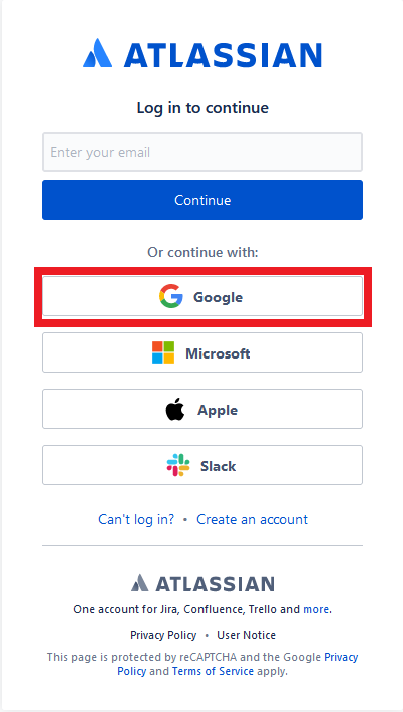
- Click the Go to Form button below.
- When the Atlassian Login screen appears, choose Google — do not select Microsoft, Apple, or Slack.
- Log in using your VCU SSO credentials to continue. NO VPN Required
If you encounter any issues signing in, please contact the Informatics Support Team.